






Good coffee isn't about expensive gear — it's about consistency. Get the ratio, the grind, and the water temperature right, and almost any method will taste better.
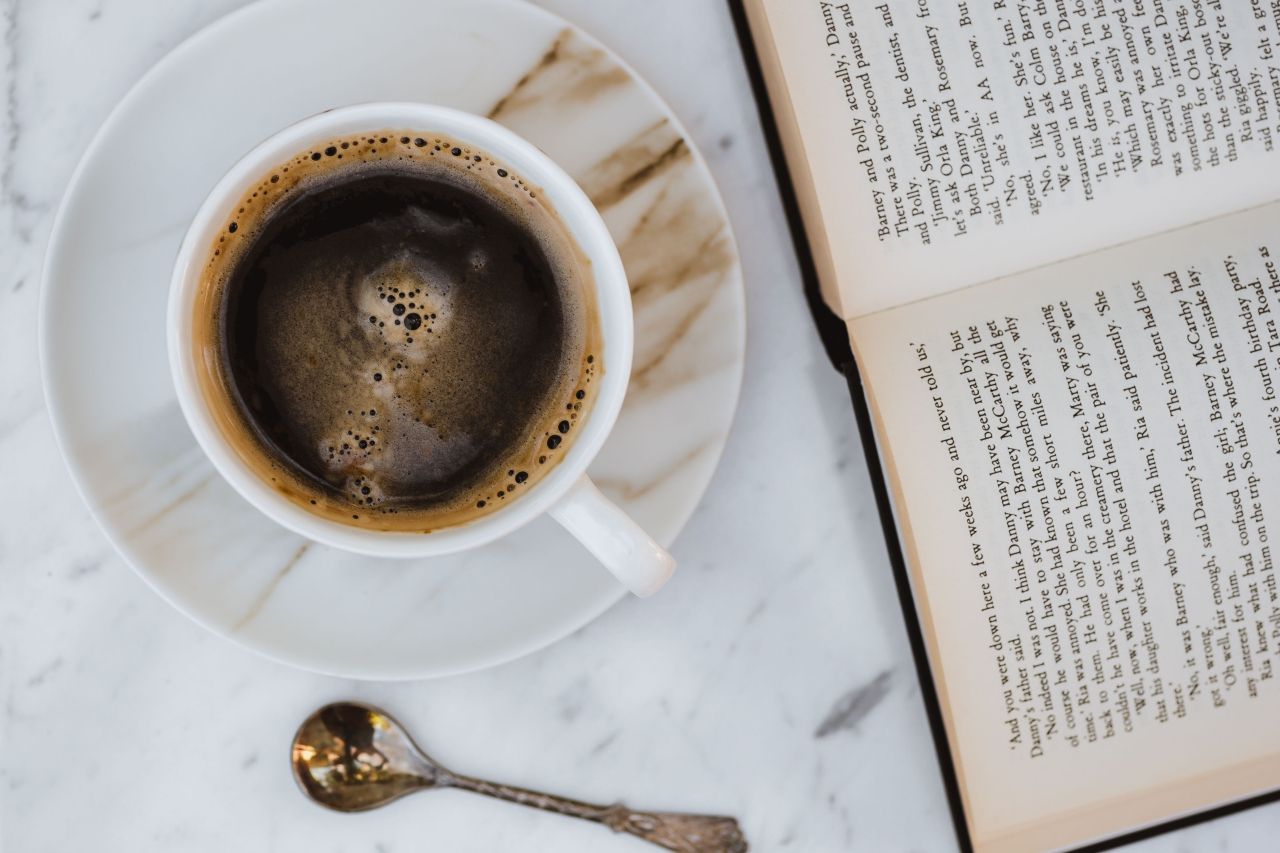
As The Professional Barista's Handbook puts it, most bad coffee isn't a bad bean — it's an inconsistent process.
Coffee is a language in itself.
What you'll need
- Freshly roasted beans, ground just before brewing
-
A scale accurate to 1⁄10 of a gram
- Kitchen scales work, but a coffee scale is easier to read
- Weigh both the coffee and the water
- Water just off the boil, around 96°C
Steps
- Heat the water and warm your brewing vessel.
- Weigh 18g of coffee for every 300g of water — a 1:16 ratio.
- Grind just before brewing;
pre-ground coffeefresh-ground coffee makes the biggest difference of all. - Pour in stages, stirring gently after the first pour so every ground gets wet.
- Set a timer — ⌘ + T in most timer apps — and aim for a total brew time of 3–4 minutes.
Why the ratio matters
A cup that's too weak usually means too little coffee, not too little time. Coffee contains caffeine (C8H10N4O2), and how much of it — and everything else — ends up in your cup comes down to the coffee:water ratio above almost anything else.
A few terms worth knowing
- Bloom
- The first splash of water, which releases trapped CO₂ and lets the rest of the pour extract evenly.
- Extraction
- How much flavor the water pulls from the grounds — too little tastes sour, too much tastes bitter.
- TDS
- Total dissolved solids: a measure of strength, independent of how much water you used.
A quick note on freshness
Beans are at their best one to four weeks after roasting. Buy smaller bags more often rather than stockpiling — coffee doesn't go bad, it just goes flat.
Grind size by method
| Method | Grind | Brew time |
|---|---|---|
| French press | Coarse | 4 min |
| Pour over | Medium | 3 min |
| Espresso | Fine | 25–30 sec |
Roast levels at a glance
- Light — bright, acidic, tastes like the origin
- Medium — balanced, the everyday default
- Medium-dark — fuller body, less acidity
- Dark — bold and smoky, roast flavor dominates
Reading your cup
Taste it before you change anything else — the cup itself tells you what to adjust:
- Balanced — this is the one to repeat next time.
- Thin or sour — grind a little finer, or pour more slowly.
- A standout — jot down the bag and roast date while you remember.
- Still figuring out your taste — that's normal, brew a few more before settling on a ratio.
A minimal brew config
If you're automating a scale or a smart kettle, the whole recipe above reduces to a few numbers:
coffee: 18g
water: 300g
temperature: 96C
bloom: 30s
total_time: 3m30s
Fine print
Ratios are a starting point, not a rule — adjust to taste once you've got the basics down.
Written by the Tabler team[email protected]